When we think of superheroes, most of us conjure up images of Spiderman, Captain America, among a variety of other day-saving characters sporting spandex. What we don’t realize is that many of our favourite heroes have one thing in common – they were brought to life by the revolutionary creator, Stan Lee. In The Guardian’s, “Stan Lee: The Greatest Storyteller”, author Damien Walter points out the great impacts that the visionary had on the fictional world of superheroes that we can all enjoy today. Stan Lee was the father of a new type of superhero media that is relatable to the underdog. He foreshadowed the future meaning of “geek power”, and showed how intelligent individuals can use innovation and science to hold power, whether it be for good or evil. Walter makes the case that through all of his contributions to superhero lore, Stan Lee will go down in history as one of the greatest storytellers to have ever lived.
Throughout the article, Damien Walter uses numerous methods of development in order to sway his audience and advance his thesis. Most obviously, the author uses classification to show readers that a common theme is present among Lee’s characters. Walter makes references to heroes such as Spiderman, The Fantastic Four, and Iron man, providing brief descriptions of the characters in order to show that they all rely on science to come out on top at the end of the day. By providing readers with these examples, Walter creates a classification for many of Lee’s characters, setting them apart from previously seen superheroes based on the tools that they use to save the day. This allows the audience to pick up on a trend which is integral to the thesis that he is attempting to convey.
In addition to classification, the author uses contrast to emphasize his thesis. Walter alludes to the archetypal hero from before Stan Lee made his mark, noting that they would usually triumph through strength or ruthlessness. With this trend in the mind’s of readers, Walter mentions numerous Stan Lee characters who do not share the same traditional macho-man hero traits. Instead, it is made clear that Lee’s heroes use their minds to solve problems, contributing to the evolving concept of what it is to be heroic. By contrasting the heroes from past generations to the creations of Stan Lee, the author was able to clearly show readers the difference in the portrayal of heroism, and how Lee’s ideas would later become more mainstream than anyone had ever expected.
The stylistic device that is utilized by Damien Walter is symbolism. Walter continuously references the originality of Lee’s characters, in the sense that their power comes from knowledge rather than physical ability. Having reinforced this theme throughout the entire article, Walter throws in a subtle note regarding “geek culture”, and how power is now held by those who can innovate and use science the most effectively. This may seem like a meaningless comment, however, the mention of the real world is actually crucial in getting the message across. In the article, Walter suggests that the rise of Stan Lee’s heroes symbolize the changing of the guard in terms of what it means to be powerful in the real world. Where as big muscles and a leather jacket may have represented power before, it’s new embodiment is the smartest, most innovative, or most tech savvy among us.
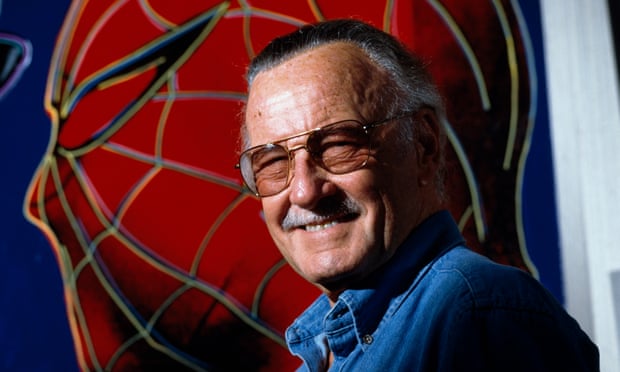
Not only does the stylistic content of the article aid in the construction of the thesis, but the formatting of the piece itself actually has an impact on the effectiveness of the article. The piece is broken into multiple smaller paragraphs, featuring a large image of Stan Lee at the beginning. This formatting decision was made with the purpose of engaging readers and convincing the audience to read the entire article, and not just the first sentence. If articles are made up of only massive blocks of text, many readers will be intimidated and discouraged to read the entirety of the piece. When the text is broken up into multiple small paragraphs, however, audiences don’t experience the same dread of having to read an article that appears so taxing.
In biographical texts of any sort, tone plays a key role in aiding readers as they attempt to gauge the author’s feeling towards the person of interest. “Stan Lee: The greatest storyteller”, is no exception, with author Damien Walter flaunting his advanced vocabulary at various points throughout the article to help further his thesis. For example, Lee is described in the piece as charming, heroic, and even prophetic, three adjectives that I, personally, wouldn’t mind having slapped beside my name. Walter’s choice of word’s bearing overwhelmingly positive connotations provides readers with insight in regards to how Walter truly feels about Stan Lee.
To wrap things up, I would have to fully agree with Damien Walter on his comments that Stan Lee’s superhero lore foreshadowed the recent shift in power dynamics in the real world. As I reminisce of the days when I would read Ant-man comics, or play pretend Spiderman with my brother, I realize how great of an impact Stan Lee had on millions of kids worldwide, and I am grateful for the gifts that his creations have given all of us.
 ENG4U: Sam I Am